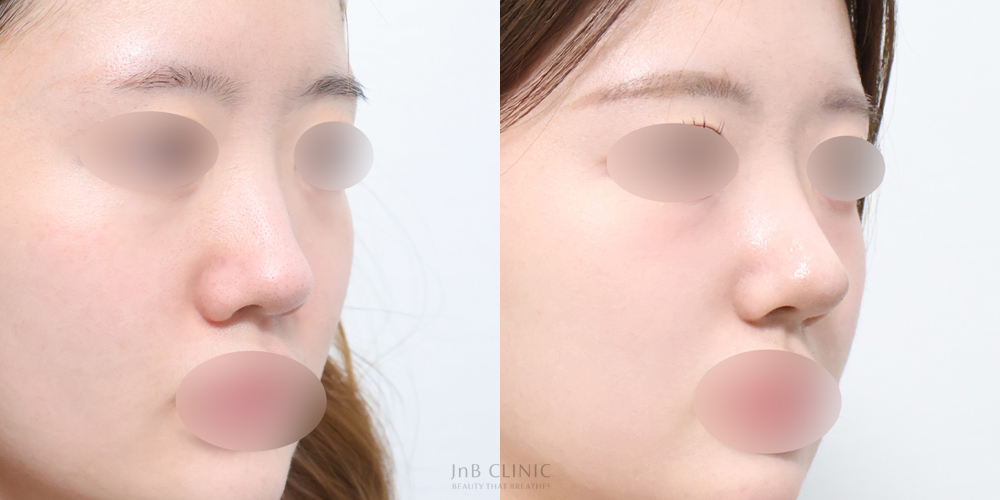
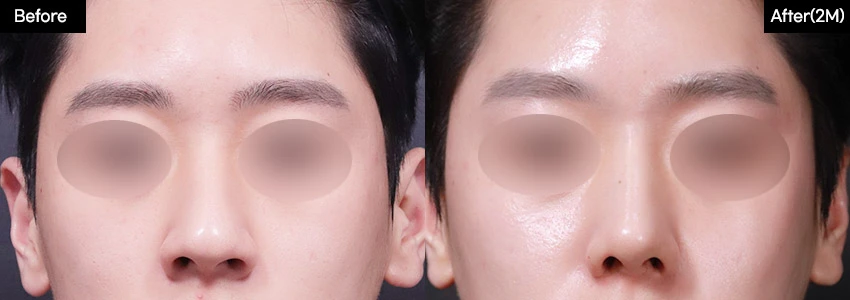
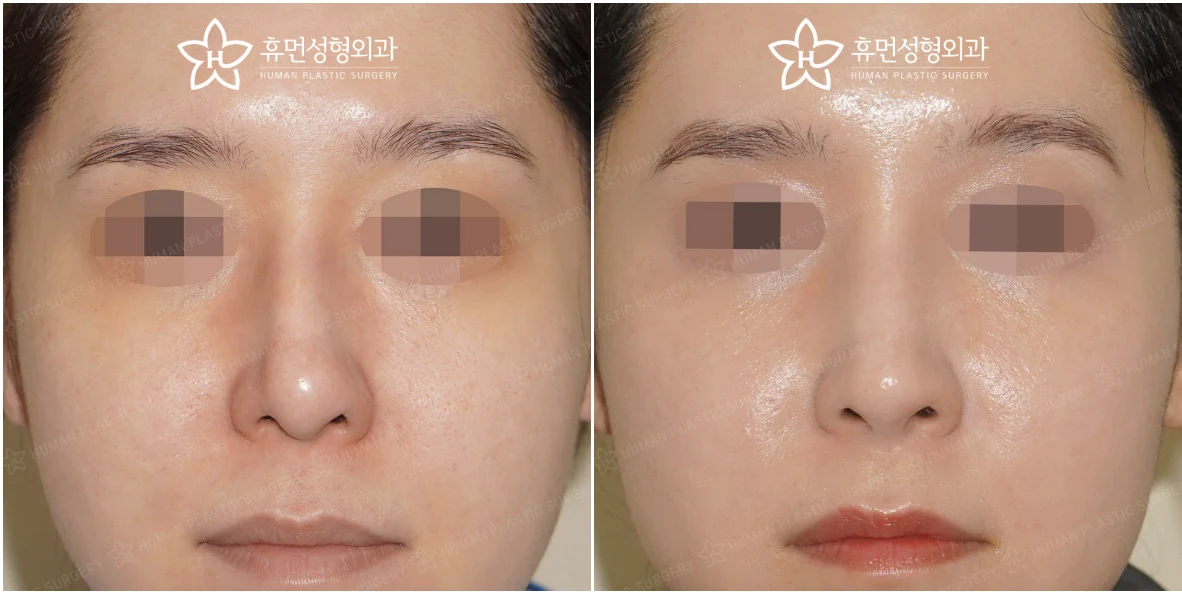
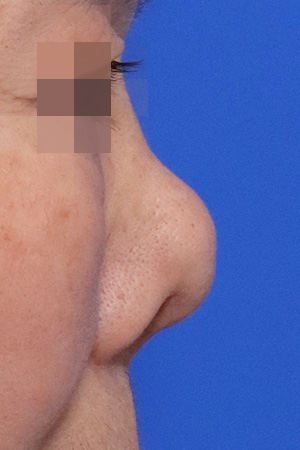
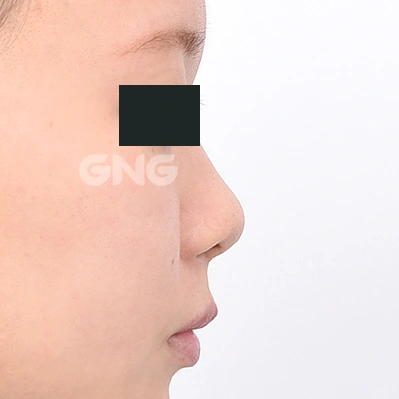
A rounded nasal tip can reflect several features, including the underlying cartilage and the skin covering it. Tip rhinoplasty may reshape, reposition or support cartilage, but the degree of visible definition depends on your anatomy. The key question is whether your concern is tip width, projection, downward position or the nostril base. These are different changes. A smaller-looking tip should be planned together with support and breathing, rather than judged only by a narrow front-view photograph.
“Bulbous nose” describes an appearance rather than a complete diagnosis. Patients may mean a rounded tip, a wide-looking lower nose or a lack of definition in photographs. Before selecting a tip procedure in Korea, identify the feature you actually want to change and ask what contributes to it.
| What you notice | Clarify with the surgeon | Why it matters |
|---|---|---|
| Rounded front view | Cartilage shape and overlying skin | Visible definition has anatomical limits |
| Tip extends too far or too little | Projection relative to the face | Narrowing alone may not address the concern |
| Tip points downward | Position at rest and when smiling | The requested change needs to be defined |
| Lower nose looks wide | Tip versus nostril-base width | Tip work and alar reduction are different procedures |
Describe the tip in more than one view
Take your consultation beyond a single front-facing selfie. Explain whether the concern appears from the front, profile, three-quarter view or when smiling. Ask the surgeon to distinguish the tip from nostril width and overall bridge proportions.
Cleveland Clinic describes tip reshaping using techniques such as cartilage suturing or modification, with grafting considered in some circumstances. This does not mean every rounded tip should receive the same operation. Ask which element of the proposed plan addresses your concern.
Discuss definition and limits together
Request a realistic explanation of the degree of definition your anatomy may allow. Do not translate an edited example photo into an expected outcome. A reference image is most useful when you can point to one feature you like and ask whether it is relevant to your face.
Ask the surgeon to show which features they would preserve. If the plan includes bridge work or nostril surgery alongside tip refinement, ask why each additional change is recommended and what happens if you prefer a more limited operation.
- What contributes to the rounded appearance in my case?
- Is the main goal narrowing, projection, rotation or support?
- Would a graft be used, and for which purpose?
- What risk would a more aggressive change introduce?
Read tip results with the follow-up date
Early and later photographs answer different questions. Tip swelling may take time to settle; Cleveland Clinic notes that the final tip appearance can take about a year to emerge. Ask how your surgeon will track healing rather than judging the outcome only when a splint comes off.
A useful gallery should identify when the after photograph was taken and whether other procedures occurred. Consistent lighting, distance and angles make the comparison more informative. A few attractive results cannot establish how your particular nose will heal.
Prepare a focused consultation brief
Write your priority in one sentence, then add two things you do not want changed. This gives the surgeon a starting point for a specific conversation and helps prevent an expanding list of optional procedures from obscuring your original goal.
Before booking, request the expected review schedule and individualized advice on work, glasses, exercise and travel. Ask how to contact the team if the shape concerns you during recovery, and how they distinguish routine observation from the need for an examination.
Decisions to discuss with your surgeon
Name the change precisely
Choose one priority: more definition, less width, a different profile position or less drooping. Mark that feature on your own photographs. Ask the surgeon to explain how the front, side and base views may change together, including any feature that could become more noticeable.
Discuss skin and framework together
Skin thickness and cartilage strength affect planning. A reference nose with different anatomy may not show a realistic level of definition for you. Ask for a description of the likely improvement and the remaining fullness instead of treating a simulation as a result you are buying.
Keep additional procedures optional
If bridge augmentation or nostril reduction is proposed, ask to review a tip-only option as well. Compare the advantages, limits and recovery implications of each plan. Broader surgery should have a clear reason connected to your goals.
What to settle at your consultation
- Bring front, side, three-quarter and base-view photographs.
- Mention any previous filler or nasal procedure.
- Ask when the tip can be assessed beyond early swelling.
- Write down the features you want to preserve.
Frequently asked questions
Is tip rhinoplasty always a small operation?
The visible area is small, but the required structural work varies. Ask what the procedure includes rather than assuming limited recovery or risk from its name.
Will narrowing the tip narrow my nostrils?
Do not assume so. Ask the surgeon to distinguish tip shape from the nostril base and explain which proposed changes address each concern.
Further reading
Updated 13 October 2026. General education; a personal surgical plan requires an examination.